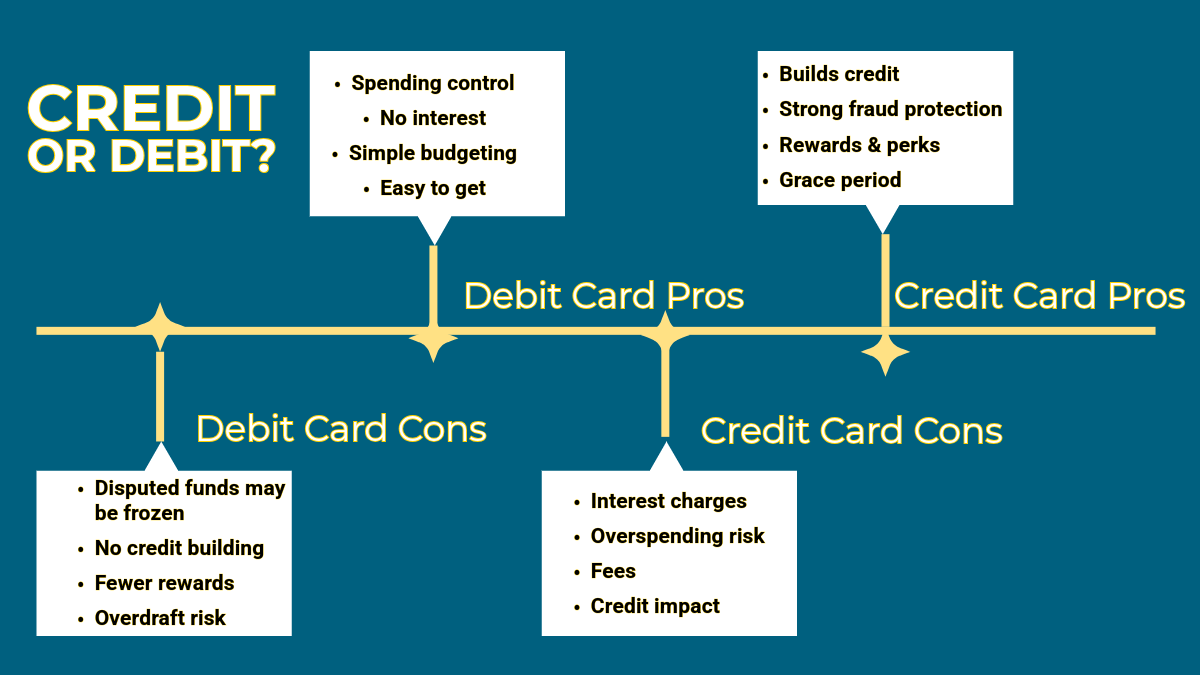
Choosing between a debit card and a credit card comes down to how you manage money, your goals, and your tolerance for risk. Here’s a breakdown of the pros and cons of each:
Debit Card
Pros
- Spending control: You can only spend what’s in your bank account, which helps avoid debt.
- No interest charged: Since you’re using your own money, there are no interest charges. Some banks and credit unions pay interest for idle funds held in a debit card account.
- Simple budgeting: Transactions come out immediately, making it easier to track spending.
- Easy to get: No credit check required.
Cons
-
Problems may result in the amount in dispute being frozen until final resolution.
- No credit building: Debit cards don’t help build your credit history.
- Fewer rewards: Rarely offer cashback, points, or travel perks.
- Overdraft risk: If you overspend, you might face overdraft fees.
Credit Card
Pros
- Builds credit: Responsible use helps improve your credit score.
- Strong fraud protection: Easier to dispute charges without losing your own money upfront.
- Rewards & perks: Many cards offer cashback, travel rewards, or purchase protections.
- Grace period: You can delay payment without interest if you pay your balance in full each month.
Cons
- Interest charges: Carrying a balance can lead to high-interest debt.
- Overspending risk: Easy to spend more than you actually have.
- Fees: Some cards have annual fees, late fees, or foreign transaction fees.
- Credit impact: Missed payments or high balances can hurt your credit score.
When to Use Each
Debit card is better if:
- You want strict spending discipline
- You’re avoiding debt entirely
-
You’re managing a tight budget
Credit card is better if:
- You pay your balance in full every month
- You want to build credit
- You want rewards
Bottom line
- Debit is safer for budgeting, but fewer benefits
- Credit is more powerful financially, but requires discipline