Charity can be sweet, but scammers turn it sour. Here’s how to determine if the charity you’re considering giving to is legitimate.
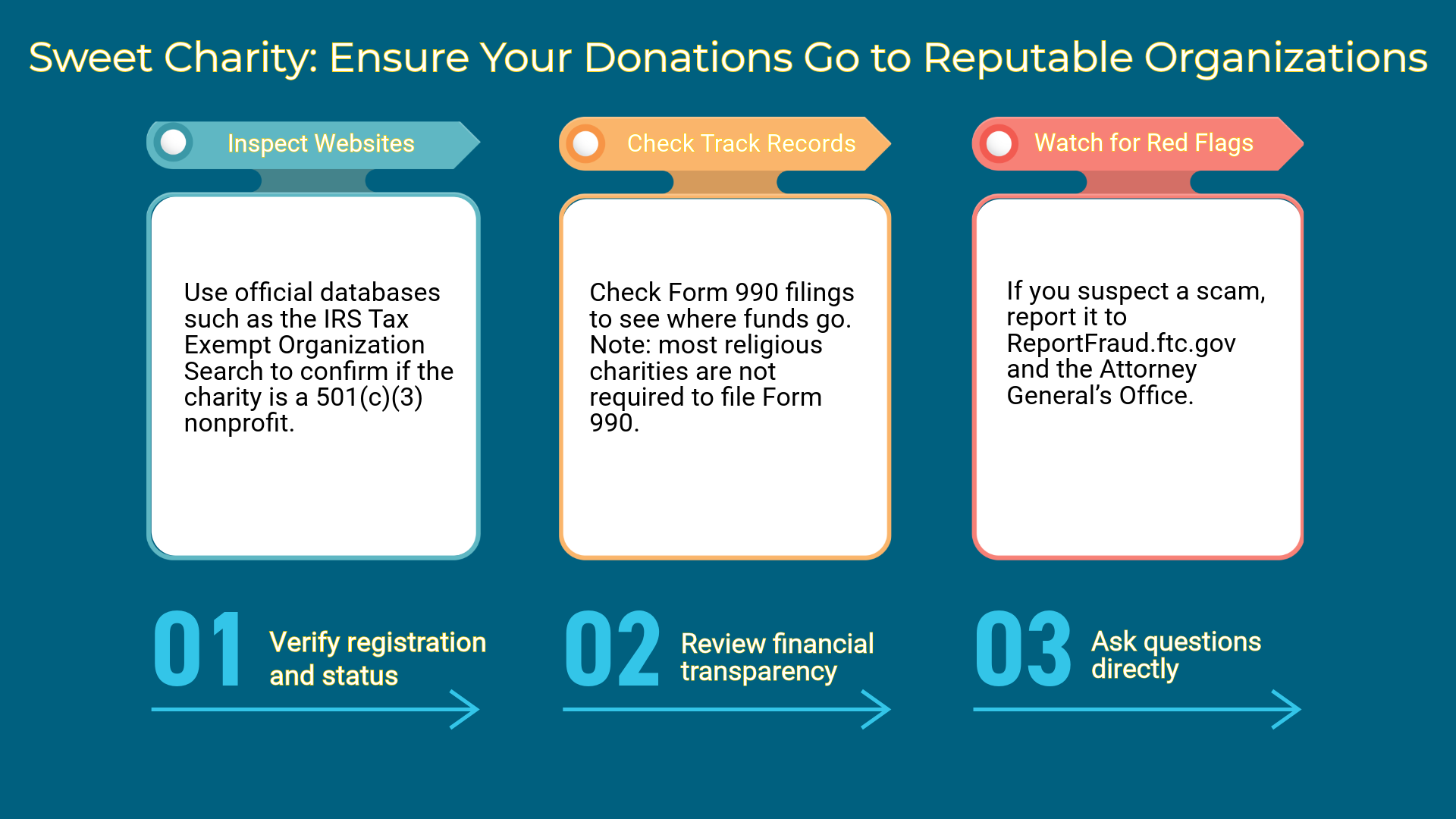
Verify registration and status
- Use official databases:
- IRS Tax Exempt Organization Search – confirms if it’s a 501(c)(3) nonprofit
- Charity Navigator, Candid (formerly GuideStar), and BBB Wise Giving Alliance all provide charity ratings, financial info, and legitimacy details.
- Check with your state charity regulator (in Nebraska, that’s the Nebraska Attorney General’s Office).
Review financial transparency
- Legitimate charities publish:
- Annual reports and Form 990 filings (available via Candid/GuideStar). Note: Most religious charities are not required to file Form 990. For more information: Filing Requirements for churches and religious organizations | Internal Revenue Service
- Clear details on how donations are spent — e.g., programs vs. administration.
- Be skeptical of groups that can’t show where money goes.
Watch for solicitation red flags
- Pressure tactics (“Donate now or people will suffer!”).
- Unclear or generic names resembling well-known charities (e.g., “Red Cross Relief Fund” instead of “American Red Cross”).
- Requests for cash, gift cards, cryptocurrency, or wire transfers — all red flags.
- Untraceable contact info — no physical address, official website, or verifiable phone number.
Inspect the website and email
- Verify the URL ends in .org (not .com, .net, or misspellings).
- Look for:
- Secure connection (https://)
- Legitimate contact information
- No spelling errors or generic images
- Avoid links sent in unsolicited messages or social media DMs.
Research their track record
- Search the charity’s name + “scam,” “complaint,” or “reviews.”
- See if media outlets or watchdogs have investigated them.
- Confirm their mission, leadership, and impact reports are publicly available.
Ask questions directly
A legitimate charity should answer:
- “How is my donation used?”
- “Are you registered with the IRS?”
- “Can I see your financial report or 990 form?”
If they refuse or get defensive — that’s a warning sign.
If you suspect a scam
- Report it to: