Negotiating with creditors usually works best when you approach it like a structured business conversation: show that you’re proactive, realistic, and prepared with a specific proposal.
Here’s a practical process that improves the odds of getting better terms.
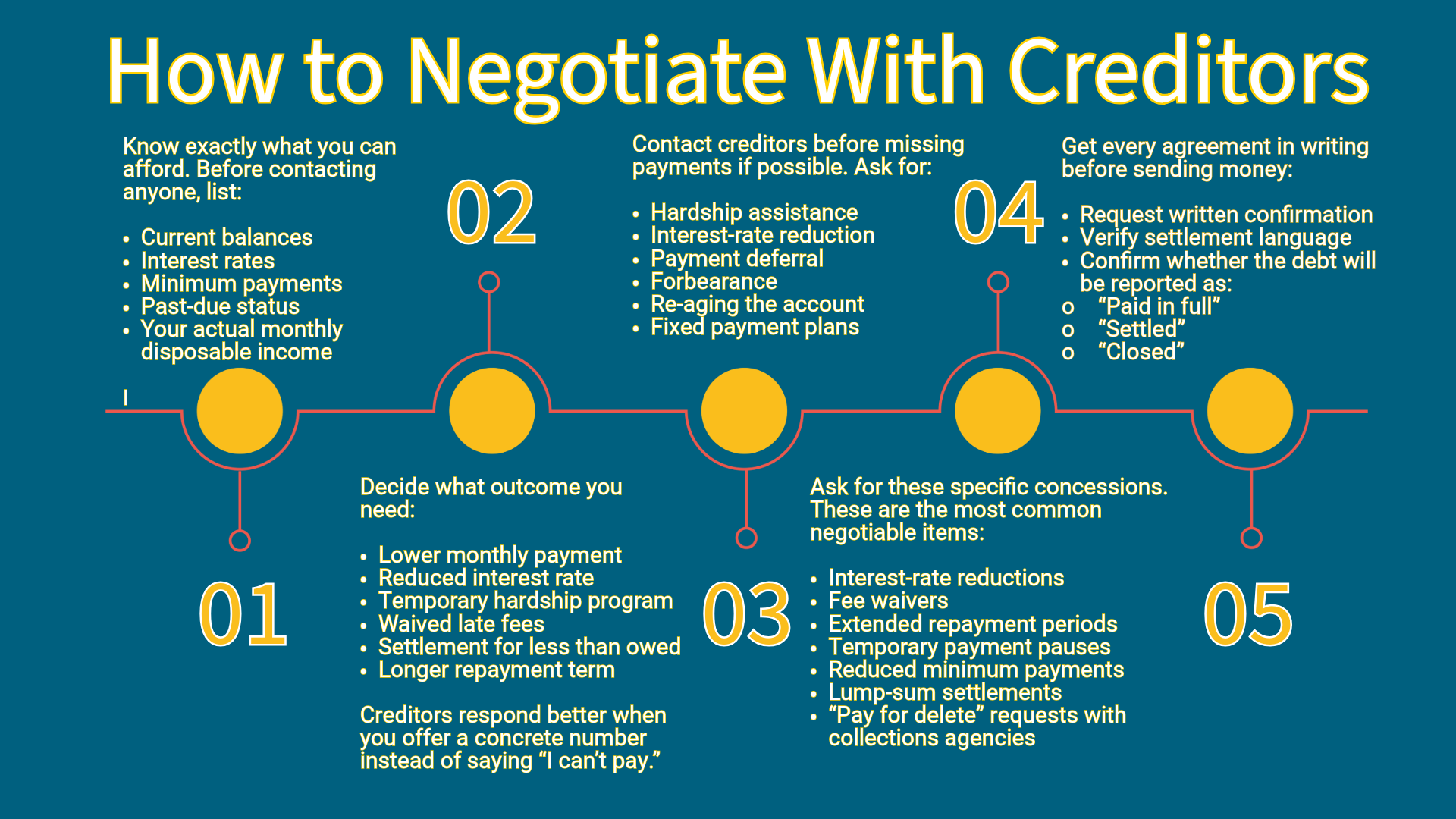
Know exactly what you can afford
Before contacting anyone, list:
- Current balances
- Interest rates
- Minimum payments
- Past-due status
- Your actual monthly disposable income
Decide what outcome you need:
- Lower monthly payment
- Reduced interest rate
- Temporary hardship program
- Waived late fees
- Settlement for less than owed
- Longer repayment term
Creditors respond better when you offer a concrete number instead of saying “I can’t pay.”
Contact creditors before missing payments if possible
You generally have more leverage before accounts become severely delinquent.
Ask for:
- Hardship assistance
- Interest-rate reduction
- Payment deferral
- Forbearance
- Re-aging the account
- Fixed payment plans
Many lenders have internal hardship departments that aren’t advertised publicly.
Use a simple negotiation script
Keep it calm, factual, and specific.
Example:
“I’ve had a financial hardship and I want to avoid falling behind further. I can realistically pay $___ per month. Are there any hardship or reduced-interest programs available?”
If already behind:
“I want to resolve this account. I can’t afford the current payment, but I can commit to $___ consistently.”
For settlement offers:
“I may be able to make a lump-sum payment if the account can be settled for less than the full balance.”
Ask for these specific concessions
These are the most common negotiable items:
- Interest-rate reductions
- Fee waivers
- Extended repayment periods
- Temporary payment pauses
- Reduced minimum payments
- Lump-sum settlements
- “Pay for delete” requests with collections agencies (less common now, but sometimes possible)
Get every agreement in writing
Before sending money:
- Request written confirmation.
- Verify settlement language carefully.
- Confirm whether the debt will be reported as:
- “Paid in full”
- “Settled”
- “Closed”
Never rely only on a phone conversation.
Know when settlement makes sense
Debt settlement can reduce what you owe, but:
- It may hurt your credit.
- Forgiven debt can sometimes be taxable.
- Collection activity may continue during negotiations.
Settlement is usually most effective when:
- The account is already delinquent.
- You have access to a lump sum.
- The creditor believes bankruptcy is a realistic alternative.
Be careful with debt relief companies
Some charge high fees or make unrealistic promises.
If you want professional help, look for a nonprofit credit counseling agency accredited by organizations like:
- National Foundation for Credit Counseling
- Financial Counseling Association of America
In Nebraska, collections agencies are licensed by the Secretary of State’s office. https://sos.nebraska.gov/licensing/debt-management-agencies
Official resources:
Prioritize the riskiest debts first
Generally prioritize:
-
Secured debts (car, mortgage)
-
Debts tied to essential services
-
High-interest credit cards
-
Collection accounts
Keep records of everything
Track:
- Dates/times of calls
- Representative names
- Promised terms
- Confirmation numbers
- Copies of letters and emails
A paper trail matters if disputes arise later.
If things are severe, consider all options
If minimum payments are impossible even after negotiation, it may help to explore:
- Debt management plans
- Consolidation
- Settlement
- Bankruptcy consultation
A consultation with a consumer bankruptcy attorney is often free and can help you understand leverage before negotiating.